
Un père et un fils, en chemin à travers l’Asie. Nous ouvrons des espaces autour de la voix, du chant sacré et de la méditation — sous forme d’ateliers, de retraites et de voyages sonores. A father and a son, travelling through Asia. We open spaces around the voice, sacred chant and meditation — as workshops, retreats and sound journeys.
Chanter ensemble ne demande pas de savoir chanter. C’est de là que nous partons. Singing together does not require knowing how to sing. That is where we begin.
Ce que nous transmettons nous vient de trois traditions vivantes : le Village des Pruniers, la Voie Rouge lakota et le Nāda Yoga. What we pass on comes from three living traditions: Plum Village, the Lakota Red Road and Nāda Yoga.
Le projetThe project
Un chemin à deux voix, né d’une rencontre entre des traditions vivantes.A path in two voices, born of an encounter between living traditions.
Qui nous sommes, d’où nous venons, et comment ce projet a pris forme. Who we are, where we come from, and how this project took shape.
Qui sommes-nous ?Who we are?
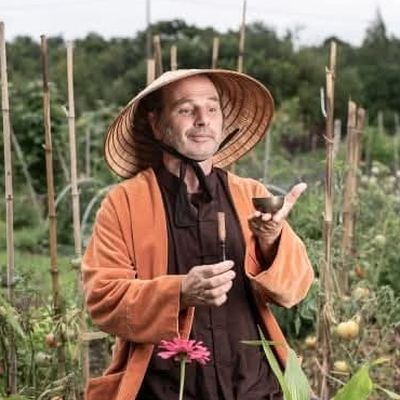
Laurent Bernays
Membre de l’Ordre de l’Inter-Être
dans la lignée de Thích Nhất Hạnh,
sous le nom de Dharma :
« Le Véritable Chemin dans l’Ouvert ».
Member of the Order of Interbeing in the lineage of Thích Nhất Hạnh, under the Dharma name:
"The True Path in the Open".
Chanteur, jardinier, enseignant de voix et de méditation, il explore depuis plusieurs décennies les liens entre le son, le chant sacré et la pleine conscience. Singer, gardener, voice and meditation teacher, he has spent decades exploring the links between sound, sacred chant, and mindfulness.
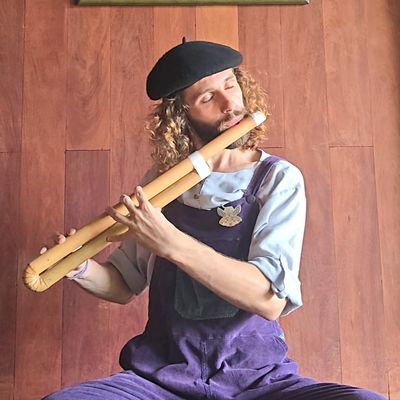
Unai Bernays
Pratiquant du Village des Pruniers,
sous le nom de Dharma :
« Pensée lumineuse de la Source ».
Practitioner of Plum Village, under the Dharma name:
"Luminous Thinking of the Source".
Chanteur, multi-instrumentiste et instructeur de Yoga, il anime des cercles de chant, parcourt le monde et étudie le Nāda Yoga — le Yoga du Son. Singer, multi-instrumentalist, and yoga instructor, he leads chant circles, travels the world, and studies Nāda Yoga — the Yoga of Sound.
Notre HistoireOur Story
Une transmission à travers les générationsA transmission across generations
Deux parcours, deux générations, reliés par une même recherche autour du son, du chant et de la méditation.
Voici les expériences, les rencontres et les transmissions qui ont façonné nos chemins et donné naissance à Sound of Dharma.
Two paths, two generations, joined by the same search into sound, chant and meditation.
These are the experiences, the meetings and the transmissions that shaped our journeys and became Sound of Dharma.
L’histoire de LaurentLaurent’s story
Bourges& le chant d’un oiseauBourges& the song of a bird
J’ai passé mon adolescence à Bourges, rue Jacques Brel. De 1987 à 1991, j’ai joué dans des groupes de rock — les caves, les bars, les scènes, les amplis poussés fort.
J’aimais la musique, mais jouer fort ne répondait pas à ce que je cherchais. Je sentais qu’il existait une autre manière d’écouter.
Un jour, dans un jardin, j’ai entendu un oiseau. Je me suis arrêté, je l’ai écouté. Et je me suis dit que je ne voulais plus chanter plus fort que lui.
Je ne suis plus jamais retourné dans les caves et les bars. Un autre chemin s’est ouvert, qui allait me conduire dans les Cévennes, au Roy Hart Théâtre, à la rencontre d’Archie Fire Lame Deer, et vers une recherche autour de la voix, du souffle et du silence.
Ce jour-là, j’ai cessé de vouloir produire du son — j’ai commencé à l’écouter.
I spent my teenage years in Bourges, on Jacques Brel Street. From 1987 to 1991 I played in rock bands — cellars, bars, stages, amplifiers turned up loud.
I loved music, but playing loud did not answer what I was looking for. I felt there was another way of listening.
One day, in a garden, I heard a bird. I stopped, and I listened. And I told myself that I no longer wanted to sing louder than the bird.
I never really went back to the cellars and the bars. Another path opened, one that would lead me to the Cévennes, in France, to the Roy Hart Theatre, to the meeting with Archie Fire Lame Deer, and towards a search around voice, breath and silence.
That day, I stopped wanting to produce sound — I began to listen to it.
Archie Fire Lame Deer& la Voie RougeArchie Fire Lame Deer& the Red Road
C’est en 1994, à 26 ans, que j’ai rencontré Archie Fire Lame Deer. Homme-médecine de la tradition lakota, peuple autochtone d’Amérique du Nord, il se présentait comme le premier à avoir transmis et popularisé la tradition spirituelle lakota auprès du peuple européen.
Archie est devenu une figure majeure de mon parcours spirituel. Je l’ai côtoyé et suivi la Voie Rouge pendant sept ans, notamment au centre de retraite Inipi des Cévennes, en France. J’envisageais alors de le suivre aux États-Unis et me préparais à participer à la Danse du Soleil.
En 2001, Archie est décédé aux États-Unis — un tournant profond dans mon parcours.
Jusqu’à aujourd’hui, nous continuons à pratiquer régulièrement l’Inipi en famille, notamment avec Maurice Rebeix, écrivain, photographe et Danseur du Soleil depuis 1999, et l’un des pionniers de la transmission de l’Inipi en France.
L’héritage qu’Archie m’a laissé comprend les chants cérémoniels propres à l’Inipi, préservés oralement de génération en génération et réservés à leur contexte rituel. Cette tradition, fondée sur l’écoute et la transmission entre générations, a ouvert en moi une quête qui ne m’a plus quitté : celle du son et du chant sacré.
It was in 1994, at the age of 26, that I met Archie Fire Lame Deer. A medicine man of the Lakota tradition, a Native people of North America, he described himself as the first to bring the Lakota spiritual tradition to the people of Europe.
Archie became a major figure on my spiritual path. I stayed close to him and followed the Red Road for seven years, mainly at the Inipi retreat centre in the Cévennes, in France. I was thinking of following him to the United States, and preparing to take part in the Sun Dance.
In 2001, Archie died in the United States — a deep turning point on my path.
To this day we still practise the Inipi together as a family, with Maurice Rebeix — writer, photographer and Sun Dancer since 1999, and one of the first to bring the Inipi to France.
What Archie left me includes the ceremonial chants of the Inipi, kept alive by voice from one generation to the next, and sung only within the ceremony. This tradition, built on listening and on transmission between generations, opened in me a search that has never left me: that of sound and sacred chant.
Beñat Achiary& le Roy Hart ThéâtreBeñat Achiary& the Roy Hart Theatre
Parallèlement à mon parcours spirituel, ma femme et moi avons découvert en 1994 le Roy Hart Théâtre, une école de recherche autour de la voix et du théâtre installée en France. Nous y avons exploré l’improvisation libre et les possibilités expressives de la voix, et avons rencontré le chanteur basque Beñat Achiary.
Beñat Achiary est devenu notre enseignant de chant pendant plusieurs années. À travers son approche du chant libre, enracinée dans le souffle, l’improvisation et la tradition orale basque, nous avons exploré une relation intuitive et profonde à la voix, du murmure au cri, avec une large place accordée à l’écoute et à la création spontanée.
Le Pays Basque
Nous avons poursuivi cette étude dans sa classe, au Conservatoire de Bayonne, où j’ai obtenu un diplôme de musiques traditionnelles et improvisées. J’ai ensuite enseigné la voix à mon tour, en cours particuliers, transmettant cette même approche de la voix libre héritée du Roy Hart Théâtre.
J’ai également co-organisé deux festivals de musiques traditionnelles au Pays Basque — l’Errobiko Festibala à Itxassou et Les Éthiopiques de Mars à Bayonne, soutenus notamment par Édouard Glissant, philosophe martiniquais à qui l’on doit le concept de créolisation.
Cette expérience m’a ouvert à la musique modale et aux Basa Ahaide, chants anciens sans paroles des montagnes basques — une période qui a nourri mon travail sur la voix et le souffle, et qui constitue l’une des racines de mon approche du chant contemplatif.
Alongside my spiritual path, my wife and I discovered the Roy Hart Theatre in 1994, a school of research on voice and theatre based in France. There we explored free improvisation and the expressive range of the voice, and we met the Basque singer Beñat Achiary.
Beñat Achiary became our singing teacher for several years. Through his approach to free singing, rooted in the breath, in improvisation and in the Basque oral tradition, we explored an intuitive and deep relationship to the voice, from whisper to cry, with wide room for listening and for spontaneous creation.
The Basque Country
We continued this study in his class, at the Bayonne Conservatory, where I received a diploma in traditional and improvised music. I then taught voice myself, in private lessons, passing on the same approach to the free voice, inherited from the Roy Hart Theatre.
I also co-organised two festivals of traditional music in the Basque Country — the Errobiko Festibala in Itxassou and Les Éthiopiques de Mars in Bayonne, supported in particular by Édouard Glissant, the Martinican philosopher who created the idea of creolisation.
This experience also opened me to modal music and to the Basa Ahaide, ancient wordless chants from the Basque mountains — a time that fed my work on voice and breath, and that remains one of the roots of my approach to contemplative chant.
La Vallée de la Vézère& les arts préhistoriquesThe Vézère Valley& prehistoric art
En 2002, nous avons poursuivi notre parcours artistique en Dordogne, où nous avons créé des rencontres entre artistes et chercheurs — les préhistoriens Jean Clottes et Serge Maury, le poète Kenneth White, le peintre Juan Luis Goenaga, et Iégor Reznikoff, qui deviendra mon enseignant de chant sacré.
Nous avons vécu trois ans dans la vallée, où nous avons fondé un centre d’arts. J’y ai poursuivi mes cours de voix, et nous avons donné des concerts dans les écoles, les grottes préhistoriques, les sites troglodytes de La Madeleine et les églises romanes.
De ces années sont nés trois albums, restés inédits, sous le nom de Suarri Dilhac, enregistrés au studio de Saint-Amand sous la direction de Georges-Alain Duriot.
En 2004, le Laboratoire d’Art en marche nous a menés à dos d’âne, de village en village, des grottes de Lascaux jusqu’à Foz Côa au Portugal.
In 2002 we continued our artistic path in the Dordogne, where we created meetings between artists and researchers — the prehistorians Jean Clottes and Serge Maury, the poet Kenneth White, the painter Juan Luis Goenaga, and Iégor Reznikoff, who would become my teacher of sacred chant.
We lived three years in the valley, where we founded an arts centre. There I continued my voice lessons, and we gave concerts in schools, in prehistoric caves, in the cave dwellings of La Madeleine and in Romanesque churches.
From those years came three albums, never released, under the name Suarri Dilhac, recorded at the Saint-Amand studio under the direction of Georges-Alain Duriot.
In 2004, the Laboratoire d’Art en marche took us on donkeys, from village to village, from the caves of Lascaux to Foz Côa in Portugal.
Thích Nhất Hạnh& le Village des PruniersThích Nhất Hạnh& Plum Village
Peu après le décès d’Archie, j’ai découvert, posé sur une cheminée, un livre poussiéreux intitulé Le Miracle de la pleine conscience, écrit par le maître zen vietnamien et artisan de la paix Thích Nhất Hạnh. J’ai appris que sa communauté, le Village des Pruniers, se trouvait à seulement trente kilomètres de chez nous — ce qui nous a conduits, ma famille et moi, vers la pratique de la pleine conscience.
Nous sommes arrivés en 2005 dans cette communauté fondée en France par Thích Nhất Hạnh en 1982. Il y a développé une approche renouvelée du bouddhisme, qu’il a appelée le Bouddhisme Engagé : une pratique qui ne se limite pas aux temples ou aux lieux de méditation, mais qui s’intègre pleinement à la vie quotidienne et au contact direct de la souffrance humaine.
Ma famille a été accueillie pendant deux ans au Village des Pruniers, où nous avons été immergés quotidiennement dans la pratique, auprès de la Sangha. Nous avons également eu la chance d’accompagner Thích Nhất Hạnh en 2005 lors de son retour au Vietnam, après 39 ans d’exil — une expérience qui a créé un lien précieux avec ce pays, et plus particulièrement avec une famille vietnamienne que nous continuons de visiter jusqu’à aujourd’hui.
Au Village des Pruniers, une autre approche du son et du chant s’est ouverte à moi à travers la pratique. Les chants cérémoniels accompagnent le quotidien, tandis que la cloche de la Pleine Conscience invite chacun à s’arrêter, à revenir à sa respiration et à écouter profondément. La pratique de l’écoute profonde, dans l’esprit d’Avalokiteśvara, « celui qui écoute les souffrances du monde », est peu à peu devenue une nouvelle voie vers le lien entre le son et la méditation.
Semer des graines
Dans l’esprit du Bouddhisme Engagé et du vœu du bodhisattva au service de tous les êtres, j’ai été ordonné membre de l’Ordre de l’Inter-Être et me suis engagé quinze ans durant, de 2009 à 2024, comme travailleur social dans l’éducation populaire à Bayonne, au Pays Basque français.
Animateur en agroécologie — formé au centre de Lablachère, fondé dans le sillage de Pierre Rabhi —, puis diplômé en permaculture auprès de Jean Irrubetagoyena, j’ai fondé l’association « Graines de Liberté » avec Fabien Nogué et créé de nombreux jardins participatifs et éducatifs, au cœur de quartiers défavorisés et dans les écoles — avec l’intention de transmettre la pratique, de semer des graines de paix dans les consciences et de créer des espaces de rencontre entre êtres humains.
L’École Occidentale de Méditation
Quinze ans après mon arrivée au Village des Pruniers, j’ai souhaité approfondir les fondements mêmes de la transmission. En 2020, j’ai rejoint l’École Occidentale de Méditation, fondée par Fabrice Midal — philosophe, écrivain et figure importante de la transmission de la méditation laïque en France.
Pendant deux ans, j’ai suivi une formation d’instructeur ainsi que plusieurs stages, approfondissant à la fois ma pratique et les fondements de la transmission de la méditation. Cette approche est venue enrichir et compléter mon expérience du Village des Pruniers.
Shortly after Archie’s death, I found a dusty book resting on a mantelpiece: The Miracle of Mindfulness, written by the Vietnamese Zen master and peace worker Thích Nhất Hạnh. I learned that his community, Plum Village, was only thirty kilometres from our home — which led my family and me towards the practice of mindfulness.
We arrived in 2005 in this community, founded in France by Thích Nhất Hạnh in 1982. There he developed a renewed approach to Buddhism, which he called Engaged Buddhism: a practice that does not remain in temples or meditation halls, but enters daily life and meets human suffering directly.
My family was welcomed for two years at Plum Village, where we were immersed in the practice each day, alongside the Sangha. We were also fortunate to travel with Thích Nhất Hạnh in 2005 for his return to Vietnam, after 39 years of exile — an experience that created a precious bond with that country, and above all with a Vietnamese family we still visit today.
At Plum Village, another approach to sound and chant opened up to me through the practice. Ceremonial chants accompany daily life, while the bell of Mindfulness invites everyone to stop, to return to the breath and to listen deeply. The practice of deep listening, in the spirit of Avalokiteśvara, “the one who listens to the suffering of the world”, slowly became a new way towards the link between sound and meditation.
Sowing seeds
In the spirit of Engaged Buddhism and of the bodhisattva vow to serve all beings, I was ordained a member of the Order of Interbeing, and worked for fifteen years, from 2009 to 2024, as a social worker in community education in Bayonne, in the French Basque Country.
As an agroecology facilitator — trained at the Lablachère centre, founded in the wake of Pierre Rabhi —, then qualified in permaculture with Jean Irrubetagoyena, I founded the association “Graines de Liberté” with Fabien Nogué and created many shared and educational gardens, in poorer neighbourhoods and in schools — with the intention of passing on the practice, of sowing seeds of peace in people’s minds, and of creating places where human beings can meet.
The École Occidentale de Méditation
Fifteen years after arriving at Plum Village, I wished to go deeper into the very foundations of transmission. In 2020, I joined the École Occidentale de Méditation, founded by Fabrice Midal — philosopher, writer and an important figure in the teaching of secular meditation in France.
For two years I followed a teacher training and several courses, deepening both my practice and the foundations of passing meditation on. This approach enriched and completed my experience of Plum Village.
Iégor Reznikoff& l’École de LouangeIégor Reznikoff& the School of Praise
J’ai rencontré Iégor Reznikoff en 1997 — chercheur, musicologue et chanteur, connu pour ses travaux sur la voix, l’intonation juste (non tempérée) et la résonance du chant dans les espaces sacrés, des grottes préhistoriques aux églises romanes.
J’ai commencé véritablement à étudier avec lui en 2005, notamment à travers plusieurs stages qu’Iégor Reznikoff présente comme les « bases de la thérapie par le son ». Ces enseignements ont marqué un tournant important dans mon approche de la voix, du chant sacré et des phénomènes de résonance.
À travers l’étude et la pratique du chant liturgique du premier millénaire chrétien — celui dont est issu le chant grégorien —, j’ai découvert une musique modale occidentale profondément liée à la transmission orale, à la voix et à l’acoustique des lieux — une approche qui m’a peu à peu amené à développer mes propres compositions, en accord avec les lois naturelles du son et l’intonation juste.
C’est Iégor Reznikoff qui m’a aussi fait découvrir le Dhrupad, et plus particulièrement l’Alap, au cœur de l’une des plus anciennes traditions de la musique classique hindoustanie encore pratiquées aujourd’hui. Cette rencontre a ouvert une nouvelle étape : après avoir parcouru la voix, les modes et la résonance dans les traditions musicales occidentales, je me suis tourné vers la tradition indienne — le Dhrupad est alors devenu l’axe central de mon travail.
I met Iégor Reznikoff in 1997 — researcher, musicologist and singer, known for his work on the voice, on just (non-tempered) intonation, and on the resonance of chant in sacred spaces, from prehistoric caves to Romanesque churches.
I truly began to study with him in 2005, through several courses that Iégor Reznikoff presents as the “foundations of sound therapy”. These teachings marked an important turning point in my approach to the voice, to sacred chant and to resonance.
Through the study and practice of the liturgical chant of the first Christian millennium — the chant from which Gregorian chant later came —, I discovered a Western modal music deeply tied to oral transmission, to the voice and to the acoustics of places — an approach that slowly led me to write my own compositions, in tune with the natural laws of sound and with just intonation.
It was also Iégor Reznikoff who introduced me to Dhrupad, and more precisely to the Alap, at the heart of one of the oldest living traditions of Hindustani classical music. This meeting opened a new stage: after travelling through voice, modes and resonance in Western musical traditions, I turned towards the Indian tradition — Dhrupad then became the central axis of my work.
L’appel de la transmissionThe call to pass on
Après avoir mené à bien mon engagement au sein de l’association « Graines de Liberté », j’ai ressenti un appel : la transmission.
En février 2025, j’ai décidé de partir au Vietnam. Vingt ans après, j’y ai retrouvé la famille qui nous avait accueillis autrefois, et ma famille m’y a rejoint pendant deux mois. C’est dans la joie de ces retrouvailles qu’est née l’intention de porter un projet à deux, entre père et fils.
Le même été, j’ai sorti l’album Plume, enregistré avec Anthony Mazères et deux sœurs du Village des Pruniers, Lực Nghiêm et Linh Dị — disponible gratuitement en ligne.
J’ai ensuite participé à une résidence artistique à La Maison Forte de Montbalen, qui m’a offert le temps et le lieu pour approfondir ma pratique.
Nous sommes alors allés à la rencontre des communautés, en France et en Belgique, présenter mon travail autour du son, du chant sans paroles et de la Pleine Conscience — en proposant aussi des cérémonies d’Inipi en petits groupes, dans différents éco-lieux.
Puis est venu le temps du départ : un long voyage à travers l’Inde, le Népal et l’Asie du Sud-Est, entrepris avec mon fils.
Ce voyage a marqué une nouvelle étape dans notre histoire, et dans une transmission qui traverse désormais les générations : pour moi, approfondir ma quête et transmettre à mon fils ce que j’avais moi-même reçu ; pour lui, recevoir cet héritage et poursuivre à son tour ce chemin au cœur du son, du chant et de la méditation.
After completing my commitment within the association “Graines de Liberté”, I felt a call: transmission.
In February 2025 I decided to go to Vietnam. After twenty years I found again the family who had welcomed us long ago, and my own family joined me there for two months. In the joy of that reunion, the intention was born to carry a project together, father and son.
In the summer of the same year I released the album Plume, recorded with Anthony Mazères and two sisters from Plum Village, Lực Nghiêm and Linh Dị — freely available online.
I then took part in an artist residency at La Maison Forte in Montbalen, which gave me the time and the place to deepen my practice.
We then went to meet communities, in France and in Belgium, to present my work on sound, wordless chant and mindfulness — also offering Inipi ceremonies in small groups, in various eco-places.
Then came the time to leave: a long journey through India, Nepal and Southeast Asia, undertaken with my son.
This journey marked a new stage in our story, and in a transmission that now crosses generations: for me, to deepen my search and pass on to my son what I had myself received; for him, to receive this inheritance and continue in turn on this path at the heart of sound, chant and meditation.
L’histoire d’UnaiUnai’s story
Grandir entre plusieurs traditionsGrowing up between traditions
J’ai entendu chanter avant de voir le jour.
Depuis le ventre de ma mère, deux chants me parvenaient déjà :
celui d’Archie Fire Lame Deer, portant les prières lakota lors des cérémonies d’Inipi, et ceux des montagnes de la Soule, portés par le tambour et les voix de Beñat Achiary et de mes parents.
Je suis né en 1998 dans le petit village d’Itsasu, au cœur du Pays Basque, dont je tiens mon prénom : Unai, « le berger ».
En 2005, ma famille s’est installée deux ans au Village des Pruniers. J’y ai été immergé quotidiennement dans la Sangha et le Dharma, marchant régulièrement aux côtés de Thích Nhất Hạnh. La même année, nous l’avons accompagné au Vietnam lors de son retour d’exil — c’est là, dans le temple mère de Thầy, que j’ai rencontré Phúc, une amitié qui me lie encore à ce pays.
C’est dans les montagnes de Sa Pa que j’ai découvert la guimbarde vietnamienne, le Đàn môi — mon premier contact avec les instruments traditionnels d’Asie.
Thầy et moi lors de la marche de 2006 à Paris.Avoir côtoyé de telles figures dès l’enfance a semé des graines profondes dans le jardin de ma conscience. Je les cultive encore aujourd’hui, avec gratitude et respect.
I heard singing before I saw daylight.
From my mother’s womb, two chants already reached me:
that of Archie Fire Lame Deer, carrying the Lakota prayers during the Inipi ceremonies, and those of the mountains of Soule, carried by the drum and by the voices of Beñat Achiary and my parents.
I was born in 1998 in the small village of Itsasu, in the heart of the Basque Country, from which I take my name: Unai, “the shepherd”.
In 2005, my family settled for two years at Plum Village. There I was immersed each day in the Sangha and the Dharma, walking often beside Thích Nhất Hạnh. That same year we went with him to Vietnam for his return from exile — and there, in Thầy’s root temple, I met Phúc, a friendship that still ties me to that country.
It was in the mountains of Sa Pa that I discovered the Vietnamese jaw harp, the Đàn môi — my first meeting with the traditional instruments of Asia.
Thầy and I during the 2006 walk in Paris.Being close to such figures from childhood planted deep seeds in the garden of my mind. I am still growing them today, with gratitude and respect.
S’éloigner pour se rencontrerAway, to meet myself
En 2008, nous avons dû déménager à Bayonne, au Pays Basque.
Après une enfance baignée dans la spiritualité lakota, les monastères, les concerts itinérants et les voyages en âne, la vie urbaine a été une rude épreuve. On m’a mis au conservatoire pour apprendre le solfège, puis j’ai essayé le hautbois et la flûte à bec — mais cette approche ne me parlait pas. Comme si l’on imposait une forme à ce qui avait toujours été naturel et organique pour moi.
Je ne savais plus à quelle réalité j’appartenais. Et plutôt que de porter deux mondes à la fois, j’ai fini par en abandonner un : j’ai rejeté mon histoire et mes racines, et ce rejet a duré toute mon adolescence.
Le premier départ
En 2016, à dix-huit ans, je suis parti pour l’île de la Réunion : mon premier long voyage — je ne savais pas encore que je ne cesserais plus de partir.
L’année suivante, je suis reparti seul à travers l’Asie du Sud-Est. Douze ans après notre première rencontre, j’ai retrouvé la famille vietnamienne et mon ami Phúc. Je suis resté deux mois dans la vieille ville impériale de Huế, où j’ai commencé à étudier le vietnamien — une langue tonale qui éveillait déjà ma curiosité pour les subtilités de la voix.
Ce voyage m’a aussi conduit au Thai Plum Village, en Thaïlande, où j’ai revu Thích Nhất Hạnh pour la dernière fois. J’y ai retrouvé les racines de mon enfance, et reçu les Cinq Entraînements à la Pleine Conscience — mon premier engagement dans la pratique.
En 2018, j’ai poursuivi ma route en Australie, où je me suis remis à la musique et j’ai commencé à apprendre la guitare. J’y ai découvert les festivals de psytrance : des êtres humains rassemblés, dansant ensemble au rythme de motifs répétitifs. J’y ai reconnu une dimension tribale et ancienne du son — la musique comme lien, avant d’être un art.
Mon voyage s’est achevé en Inde, entre l’Himalaya, l’hindouisme et le bouddhisme tibétain. J’ai renoué avec la guimbarde, sous la forme du morchang, après de nombreuses années sans y avoir touché.
In 2008 we had to move to Bayonne, in the Basque Country.
After a childhood filled with Lakota spirituality, monasteries, travelling concerts and journeys by donkey, city life was hard. I was sent to the conservatory to learn music theory, then I tried the oboe and the recorder flute — but this way of learning did not speak to me. As if a form were being imposed on something that had always been natural and alive for me.
I no longer knew which reality I belonged to. And rather than carry two worlds at once, I ended up leaving one behind: I rejected my history and my roots, and that rejection lasted through my whole adolescence.
The first departure
In 2016, at eighteen, I left for Réunion Island: my first long journey — I did not yet know that I would never stop leaving.
The following year I set out alone across Southeast Asia. Twelve years after our first meeting, I found the Vietnamese family again, and my friend Phúc. I stayed two months in the old imperial city of Huế, where I began to study Vietnamese — a tonal language that was already awakening my curiosity for the fine details of the voice.
That journey also brought me to Thai Plum Village, in Thailand, where I saw Thích Nhất Hạnh for the last time. There I found again the roots of my childhood, and received the Five Mindfulness Trainings — my first commitment to the practice.
In 2018 I continued on to Australia, where I came back to music and began to learn the guitar. There I discovered psytrance festivals: human beings gathered together, dancing to repeating patterns. I recognised in them an old, tribal dimension of sound — music as a bond, before it is an art.
My journey ended in India, between the Himalaya, Hinduism and Tibetan Buddhism. I took up the jaw harp again, in the form of the morchang, after many years without touching one.
Le retour aux racinesReturn to the roots
Je suis rentré en France en 2019. J’ai retrouvé la cérémonie d’Inipi auprès de mon père et de Maurice Rebeix, mais avec un autre regard. Au fil des années, Maurice m’a transmis la responsabilité d’homme du feu, celui qui sert les pierres chaudes pendant la cérémonie.
En 2020, j’ai découvert le Rainbow Gathering, qui m’a fait éprouver une autre forme de vie commune, sans hiérarchie : un mois durant, on cuisine, on chante et on danse ensemble, au rythme des tambours et de la nature.
En 2022, j’ai rejoint Wake Up International, la Sangha du Village des Pruniers destinée aux jeunes engagés dans la pratique.
I came back to France in 2019. I found the Inipi ceremony again, beside my father and Maurice Rebeix, but with different eyes. Over the years, Maurice passed on to me the role of fire keeper, the one who serves the hot stones during the ceremony.
In 2020 I discovered the Rainbow Gathering, which let me live another form of shared life, without hierarchy: for a whole month we cook, sing and dance together, to the rhythm of drums and of nature.
In 2022 I joined Wake Up International, the Plum Village Sangha for young people committed to the practice.
Trouver sa voixFinding my voice
En 2023, un stage de voix au Roy Hart Théâtre a tout ouvert. J’y ai laissé ma voix s’exprimer librement et découvert en moi des graines de chanteur que je n’avais jamais osé arroser.
Je me suis mis à la chanson française — Georges Brassens, Zoufris Maracas — et pendant près de deux ans, j’ai joué dans la rue avec mon frère, notamment lors de mon deuxième voyage en Australie en 2024.
Ce périple m’a d’ailleurs fait rencontrer le Yidaki, le « didgeridoo » des peuples aborigènes du Nord, ainsi que la flûte amérindienne, instrument traditionnel lakota.
Une tension est alors apparue entre deux versants : d’un côté la chanson et la scène, de l’autre les instruments traditionnels et la relation au son. La performance ne me comblait pas, et les mots eux-mêmes ne me touchaient pas toujours en profondeur.
In 2023, a voice course at the Roy Hart Theatre opened everything. There I let my voice speak freely, and found in myself seeds of a singer that I had never dared to water.
I began with French song — Georges Brassens, Zoufris Maracas — and for nearly two years I played in the street with my brother, notably during my second journey to Australia in 2024.
That trip also brought me to the Yidaki, the “didgeridoo” of the Aboriginal peoples of the North, and to the Native American flute, a traditional Lakota instrument.
A tension then appeared between two sides: on one, song and the stage; on the other, traditional instruments and the relationship to sound. Performing did not fulfil me, and words themselves did not always touch me deeply.
Le fil renouéThe thread taken up again
Après deux ans de voyage en Australie, à chercher un sens que je ne trouvais pas, j’ai pris un billet pour le Vietnam.
Mon père y revenait après vingt ans. Ma mère et mon frère nous y ont rejoints, et la famille de Phúc nous a accueillis comme si nous n’étions jamais partis. Deux mois de partage et de joie. J’ai toujours été fasciné de voir que, malgré la barrière de la langue, nos deux familles éprouvaient un amour si pur l’une pour l’autre.
C’est là, dans cette joie-là, que l’idée d’un projet à deux a cessé d’être une idée pour devenir une vision.
En avril 2025, je suis reparti vers la Thaïlande, au Thai Plum Village, où j’avais reçu, sept ans plus tôt, un nom de Dharma que j’avais fini par perdre — puis par oublier. Je suis revenu renouveler mon engagement.
On ne m’a pas rendu l’ancien nom. On m’en a donné un autre. J’ai compris ce jour-là qu’un nom ne se garde pas comme un objet : il se reçoit à nouveau, quand on est vraiment prêt à s’engager.
Je suis ensuite retourné seul à Huế, où j’ai continué d’approfondir mon lien avec ce pays, sa culture et sa langue. Tout près de Từ Hiếu, le temple mère de Thầy. C’est là que j’ai rencontré mon ami Trần Minh, avec qui j’ai facilité de nombreux partages du Dharma et cercles de chant.
After two years travelling in Australia, looking for a meaning I could not find, I took a flight to Vietnam.
My father was returning there after twenty years. My mother and my brother joined us, and Phúc’s family welcomed us as if we had never left. Two months of sharing and joy. I have always been amazed that, despite the barrier of language, our two families felt such a pure love for one another.
It was there, in that joy, that the idea of a project between the two of us stopped being an idea and became a vision.
In April 2025 I left for Thailand, to Thai Plum Village, where seven years earlier I had received a Dharma name that I ended up losing — and then forgetting. I came back to renew my commitment.
They did not give me the old name back. They gave me another. I understood that day that a name is not something you keep like an object: it is received again, when we are truly ready to commit.
I then returned alone to Huế, where I went on deepening my bond with the country, its culture and its language. Very close to Từ Hiếu, the root temple of Thầy. It was there that I met my friend Trần Minh, with whom I facilitated many Dharma sharings and singing circles.
La découverte du DhrupadDiscovering Dhrupad
C’est pendant ces mois au Vietnam que j’ai entendu du Dhrupad pour la première fois. L’effet a été immédiat : ce que je cherchais n’était pas la chanson, mais le chant sans paroles — le son et la voix comme voie contemplative. La mémoire de mon histoire familiale est remontée, et beaucoup de choses ont pris leur sens. J’ai réservé la guitare aux cercles de chant, convaincu que chanter ensemble peut réunir les êtres.
C’est à partir de là que j’ai décidé de rejoindre mon père. Je savais qu’il avait énormément à me transmettre, et que son parcours faisait écho à ce que je cherchais en moi depuis longtemps.
Nous nous sommes retrouvés en Inde, au cœur du Dhrupad, tradition profondément liée au Nāda Yoga, le Yoga du Son.
C’est là que nous avons entrevu ensemble ce qui allait devenir Sound of Dharma.
It was during those months in Vietnam that I heard Dhrupad for the first time. The effect was immediate: what I was looking for was not song, but chant without words — sound and voice as a contemplative path. The memory of my family history rose up, and many things found their meaning. I kept the guitar for singing circles, convinced that singing together can bring human beings together.
From there I decided to join my father. I knew he had a great deal to pass on to me, and that his path echoed what I had long been searching for in myself.
We met again in India, at the heart of Dhrupad, a tradition deeply tied to Nāda Yoga, the Yoga of Sound.
There, together, we glimpsed what would become Sound of Dharma.
L’Origine de Sound of DharmaThe Origin of Sound of Dharma
« Le son comme voie d’éveil. »“Sound as a path to awakening.”
Lorsque nous portons toute notre attention sur un son, nous pouvons contempler le cosmos tout entier.When we bring our full attention to a single sound, we can contemplate the whole cosmos.
Jamun VillageLa première graineJamun VillageThe first seed
C’est à Jamun Village, sous l’arbre de la Bodhi planté par Thích Nhất Hạnh, qu’est née la vision de Sound of Dharma.
Premier Village des Pruniers d’Inde, fondé à Dehradun en 2008, le lieu est tenu aujourd’hui par l’association Ahimsa Trust et son président Shantum Seth, vieil ami et disciple laïque de Thầy.
It was at Jamun Village, under the Bodhi tree planted by Thích Nhất Hạnh, that the vision of Sound of Dharma was born.
The first Plum Village in India, founded in Dehradun in 2008, the place is cared for today by the Ahimsa Trust association and its president Shantum Seth, an old friend and lay student of Thầy.
RishikeshÀ l’écoute de MahadevRishikeshListening to Mahadev
Nous sommes venus à Rishikesh apprendre les fondations de deux disciplines qui se répondent : le yoga traditionnel et la musique classique hindoustanie.
Au Devi Music Ashram, notre professeure Neeti Kumar nous a transmis les fondations de la musique classique hindoustanie, en commençant par les ragas Yaman et Bhopali. C’est là aussi que nous avons rencontré la Bansuri, la flûte indienne en bambou.
Nous y avons donné nos premiers ateliers autour du son, dans différents centres de yoga. Inspirés notamment par l’approche d’Iégor Reznikoff, nous explorions l’écoute profonde, l’accord avec un seul son, les harmoniques et les espaces de résonance du corps.
We came to Rishikesh to learn the foundations of two disciplines that answer one another: traditional yoga and Hindustani classical music.
At the Devi Music Ashram, our teacher Neeti Kumar gave us the foundations of Hindustani classical music, beginning with the ragas Yaman and Bhopali. It was there too that we met the Bansuri, the Indian bamboo flute.
There we also held our first workshops around sound, in different yoga centres. Inspired in particular by the approach of Iégor Reznikoff, we explored deep listening, tuning to a single sound, the harmonics and the resonant spaces of the body.
VaranasiLa rencontre du DhrupadVaranasiMeeting Dhrupad
La route nous a ensuite conduits à Varanasi, l’une des villes les plus sacrées de l’Inde, au bord du Gange. Nous y avons participé au Dhrupad Mela, festival où se produisent chaque année de grandes figures des différentes lignées du Dhrupad.
C’est là que nous avons découvert la Dagarvani, l’une des grandes écoles du Dhrupad, portée notamment par la famille Dagar.
Au bord du Gange, notre écoute rencontrait une musique dans laquelle résonnaient profondément nos premières intuitions. Notre aventure au cœur de cette voie venait de commencer.
The road then led us to Varanasi, one of the most sacred cities of India, on the banks of the Ganges. There we took part in the Dhrupad Mela, a festival where great figures of the different Dhrupad lineages perform every year.
It was there that we discovered the Dagarvani, one of the great schools of Dhrupad, carried in particular by the Dagar family.
On the banks of the Ganges, our listening met a music in which our first intuitions resonated deeply. Our journey into the heart of this path had just begun.
PuneLe cœur du MaharashtraPuneThe heart of Maharashtra
Nous y avons rencontré Sameer Inamdar, musicien, enseignant et inventeur de la première Bansuri courbée qui se joue à dix doigts, spécialement conçue pour le Dhrupad.
Cette flûte dépasse certaines limites de la Bansuri classique : la main y trouve une position plus naturelle, et le passage d’une note à l’autre gagne en fluidité. Avec ses quatre octaves, elle ouvre toutes les tonalités et donne accès à un registre grave bien plus étendu.
Nous avons passé trois mois dans le gurukul de Sameer, immergés dans son enseignement et dans la pratique de cette flûte. Cette expérience marque le début d’un long parcours avec la Dhrupad Flute — une autre manière d’aborder la Bansuri, et surtout un instrument qui nous rapproche de l’espace sonore propre au Dhrupad. Nous avons enregistré avec lui un entretien filmé disponible sur YouTube.
There we met Sameer Inamdar, musician, teacher and inventor of the first curved Bansuri played with ten fingers, designed especially for Dhrupad.
This flute goes beyond certain limits of the classical Bansuri: the hand finds a more natural position, and moving from one note to the next becomes smoother. With its four octaves, it opens every key and reaches a far deeper low register.
We spent three months in Sameer’s gurukul, immersed in his teaching and in the practice of this flute. That time marks the beginning of a long path with the Dhrupad Flute — another way of approaching the Bansuri, and above all an instrument that brings us closer to the space of sound that belongs to Dhrupad. We also recorded with him a filmed conversation available on YouTube.
KatmandouLa voix de l’HimalayaKathmanduThe voice of the Himalaya
Nous avons ensuite rejoint le Dhrupad Gurukul de Katmandou, petite école familiale tenue par deux amis, Vishal et Sou, tous deux étudiants de longue date de la Dhrupad Sansthan de Bhopal, fondée par les Gundecha Brothers, eux-mêmes issus de la lignée Dagarvani.
Trois mois durant, nous avons baigné dans le chant Dhrupad : cours individuels et collectifs, approfondissement de la voix, apprentissage des principaux cycles rythmiques, accompagnés par le Pakhawaj, la percussion du Dhrupad.
Cette immersion nous a fait entrer plus profondément dans le langage du Dhrupad, au-delà de l’instrument : la place centrale de la voix, du souffle, du rythme et de l’écoute.
We then joined the Dhrupad Gurukul of Kathmandu, a small family school run by two friends, Vishal and Sou, both long-time students of the Dhrupad Sansthan of Bhopal, founded by the Gundecha Brothers, themselves from the Dagarvani lineage.
For three months we lived inside Dhrupad singing: individual and group lessons, deepening of the voice, learning the main rhythmic cycles, accompanied by the Pakhawaj, the drum of Dhrupad.
This immersion brought us further into the language of Dhrupad, beyond the instrument: the central place of the voice, the breath, the rhythm and the listening.
Nos pratiquesOur practices
Dans l’esprit de l’inter-être, chaque pratique résonne dans les autres.In the spirit of interbeing, each practice resonates within the others.
Trois manières d’entrer dans la même écoute — le temps d’un atelier, le temps d’une retraite, ou le temps d’une cérémonie. Three ways into the same listening — the time of a workshop, the time of a retreat, or the time of a ceremony.
Nos ateliersOur workshops
L’expression libre dénoue ce qui retient la voix, le chant contemplatif approfondit ensuite l’écoute et le voyage sonore finit par laisser le son nous traverser. Chaque atelier peut être vécu seul, ou tenu avec les autres au sein d’une journée de pratique.Free expression loosens what holds the voice back, contemplative chant then deepens the listening, and the sound journey finally lets the sound move through us. Each workshop can be experienced on its own, or held together with the others within a day of practice.
Voix, corps & expressiondans l’esprit du Roy Hart ThéâtreVoice, body & expressionin the spirit of the Roy Hart Theatre
Une approche somatique de la voix, explorant les liens entre le souffle, le corps et l’expression.
À travers des pratiques vocales, le mouvement et l’improvisation, chacun est invité à ressentir sa voix dans tout le corps, à reconnaître les tensions physiques et émotionnelles qui limitent l’expression, et à retrouver une voix plus libre, spontanée et incarnée.
Ouvert à tous, aucune expérience musicale requise · En groupe ou en individuel · Format adapté au lieu
A somatic approach to the voice, exploring the links between breath, body and expression.
Through vocal practices, movement and improvisation, each person is invited to feel their voice in the whole body, to recognise the physical and emotional tensions that limit expression, and to find a freer, more spontaneous and embodied voice.
Open to everyone, no musical experience needed · In a group or one to one · Format adapted to the place
Chant contemplatif& thérapie par le sonContemplative chant& sound therapy
Le chant comme pratique d’écoute, de présence et de transformation, nourrie des recherches d’Iégor Reznikoff et de la tradition du Nāda Yoga.
Écoute et chant sur un bourdon — tanpura, bols chantants ou autres instruments —, exploration des harmoniques et des résonances du corps, chant sans paroles, gammes modales indiennes et occidentales, pratique du AUM et de mantras simples.
Ouvert à tous, aucune expérience musicale requise · En groupe ou en individuel · Format adapté au lieu
Chant as a practice of listening, presence and transformation, nourished by the work of Iégor Reznikoff and by the Nāda Yoga tradition.
Listening and singing on a drone — tanpura, singing bowls or other instruments —, exploring harmonics and the resonances of the body, wordless chant, Indian and Western modal scales, the practice of AUM and of simple mantras.
Open to everyone, no musical experience needed · In a group or one to one · Format adapted to the place
Chant en lieux de résonancedans le sillage d’Iégor ReznikoffChanting in resonant placesin the wake of Iégor Reznikoff
Certains lieux chantent d’eux-mêmes. Grottes, églises, temples, grottes bouddhiques : là, une seule voix en devient plusieurs.
Nous y explorons l’écoute du lieu, l’accord avec sa résonance et les harmoniques qu’il révèle — une pratique héritée des recherches d’Iégor Reznikoff sur le son dans les espaces sacrés.
Ouvert à tous, aucune expérience musicale requise · En petit groupe · Demande un lieu à forte résonance naturelle
Some places sing by themselves. Caves, churches, temples, Buddhist caves: there, a single voice becomes many.
There we explore the listening of the place, the tuning to its resonance and the harmonics it reveals — a practice inherited from the work of Iégor Reznikoff on sound in sacred spaces.
Open to everyone, no musical experience needed · In a small group · Requires a place with strong natural resonance
Voyages sonores& relaxation profondeSound journeys& deep relaxation
Une immersion sonore inspirée des pratiques de relaxation profonde du Village des Pruniers, invitant à ralentir, écouter et revenir au corps.
Voix, instruments traditionnels, bols chantants et autres sonorités acoustiques accompagnent peu à peu l’attention vers une écoute intérieure.
Environ une heure · En groupe ou en individuel · Rien à préparer, il suffit de s’allonger
A sound immersion inspired by the deep relaxation practices of Plum Village, an invitation to slow down, to listen and to come back to the body.
Voice, traditional instruments, singing bowls and other acoustic sounds slowly carry the attention towards an inner listening.
About one hour · In a group or one to one · Nothing to prepare, you simply lie down
Journée de Pleine Conscienceinspiré du Village des PruniersA Day of Mindfulnessinspired by Plum Village
Une journée où la pleine conscience s’intègre à chaque geste du quotidien.
Méditation guidée, marche méditative, repas en silence, écoute profonde de la cloche, cérémonie du thé, partage du Dharma et cercles de chant.
C’est le cadre le plus ample que nous proposons : les quatre ateliers précédents peuvent y trouver leur place, seuls ou ensemble. Sur un ou plusieurs jours, jusqu’à une semaine.
Ouvert à tous · D’une journée à une semaine · Formats étudiés avec le lieu d’accueil
A day where mindfulness enters every gesture of daily life.
Guided meditation, walking meditation, meals in silence, deep listening to the bell, tea ceremony, Dharma sharing and singing circles.
This is the widest frame we offer: the four workshops above can find their place within it, alone or together. Over one day or several, up to a week.
Open to everyone · From one day to one week · Formats worked out with the host place
Retraites & VoyagesRetreats & Journeys
Un atelier dure quelques heures. Une retraite dure assez longtemps pour que la pratique ne soit plus une activité, mais une façon d’habiter la journée — manger, marcher, chanter, garder le silence. A workshop lasts a few hours. A retreat lasts long enough for the practice to stop being an activity and become a way of inhabiting the day — eating, walking, singing, keeping silence.
Retraiteschez ceux qui nous accueillentRetraiteschez ceux qui nous accueillent
Nous nous déplaçons dans les lieux qui nous invitent — centres de pratique, éco-lieux, monastères, maisons ouvertes — pour y tenir une retraite de quelques jours.
Chaque retraite se construit avec le lieu qui l’accueille : sa durée, son rythme et le nombre de participants se décident ensemble, selon ce que l’endroit permet et ce que la communauté souhaite recevoir.
Les quatre pratiques que nous proposons en atelier y trouvent naturellement leur place, réparties au fil des jours.
We travel to the places that invite us — practice centres, eco-places, monasteries, open houses — to hold a retreat there over several days.
Each retreat is built together with the place that hosts it: its length, its rhythm and the number of participants are decided together, according to what the place allows and what the community wishes to receive.
The four practices we offer as workshops naturally find their place there, spread over the days.
Voyagessur les chemins de la pratiqueVoyagessur les chemins de la pratique
Nous imaginons aussi des voyages où la pratique se vit en chemin plutôt qu’en un seul lieu : l’Inde à la rencontre du Dhrupad et du Nāda Yoga, ou le Vietnam sur les traces des lieux sacrés.
Marches en pleine conscience, visites de temples et de monastères, rencontres avec ceux qui y vivent, chants dans les lieux de résonance, méditations et cercles de chant au fil des étapes — un voyage où l’on regarde autrement ce que l’on traverse.
Ces voyages sont encore en préparation. Leurs modalités se dessineront au fil de nos propres chemins.
We also imagine journeys where the practice is lived along the way rather than in a single place: India, meeting Dhrupad and Nāda Yoga, or Vietnam, following the trace of sacred places.
Mindful walks, visits to temples and monasteries, meetings with those who live there, chanting in resonant places, meditations and singing circles along the stages — a journey where we see differently what we pass through.
These journeys are still being prepared. Their shape will take form along our own paths.
Prochaines datesUpcoming dates
Aucune date n’est fixée pour l’instant. Nos prochaines retraites naîtront des rencontres du voyage — écrivez-nous pour être prévenus, ou pour nous inviter.
No dates are set for now. Our next retreats will grow out of the meetings of the journey — write to us to be told, or to invite us.
Accueillir une retraitece qu’il faut savoirHosting a retreatwhat to know
Si vous tenez un lieu et souhaitez nous accueillir, voici ce dont nous parlerons ensemble :
Le lieu & l’hébergement · La durée & les dates · Le nombre de participants · Les repas · Le matériel sur place · Les conditions
Nous voyageons avec nos instruments et nous adaptons à ce qui existe déjà. Le reste se décide au cas par cas, selon vos usages et vos possibilités.
If you run a place and would like to welcome us, here is what we will talk about together:
The place & the lodging · The length & the dates · The number of participants · The meals · What is already there · The conditions
We travel with our instruments and adapt to what already exists. The rest is decided case by case, according to your ways and your possibilities.
Cérémonie de l’InipiInipi Ceremony
O Mitakuye Oyasin — À toutes mes relationsO Mitakuye Oyasin — To all my relations
Cette phrase sacrée lakota exprime la non-séparation entre tout ce qui est. Elle rejoint intimement la vision de l’inter-être de Thích Nhất Hạnh. This sacred Lakota phrase speaks of the non-separation between all that is. It meets closely the vision of interbeing of Thích Nhất Hạnh.
Qui vous accueilleWho welcomes you
Je suis Laurent Bernays, et je pratique la cérémonie de l’Inipi depuis 1994. Je serai responsable de la conduite de la cérémonie, accompagné de mon fils, qui tiendra la charge d’homme du feu.
C’est cette année-là que j’ai rencontré Archie Fire Lame Deer, homme-médecine du peuple Lakota. J’ai participé à ses cérémonies dans les Cévennes pendant sept ans, jusqu’à sa disparition en 2001. Il m’a transmis la pratique de l’Inipi, aux côtés de José Artiaga, Maurice Rebeix et d’autres pratiquants de la Voie Rouge.
Ce qu’il m’a laissé de plus précieux, ce sont les chants de prière lakota. Ils ont été le point de départ de ma recherche sur le chant sacré, qui m’accompagne depuis.
I am Laurent Bernays, and I have practised the Inipi ceremony since 1994. I will lead the ceremony, together with my son, who will hold the role of fire keeper.
It was that same year that I met Archie Fire Lame Deer, a medicine man of the Lakota people. I took part in his ceremonies in the Cévennes, in France, for seven years, until he left us in 2001. He passed on to me the practice of the Inipi, alongside José Artiaga, Maurice Rebeix and other practitioners of the Red Road.
What he left me that is most precious are the Lakota prayer chants. They were the starting point of my search into sacred chant, which has stayed with me since.
Le dérouléHow it unfolds
La cérémonie se déroule sur une journée entière, parfois deux. Elle commence tôt le matin par la préparation du feu, qui chauffera les pierres pendant plusieurs heures.
Le bain de vapeur se tient en quatre portes — quatre temps successifs, séparés par des pauses. Il fait sombre, l’espace est confiné et la chaleur intense. Chacun peut sortir à tout moment, sans avoir à se justifier.
Nous entrons dans la hutte à jeun.
Ce qu’il faut prévoir
- Une couverture, un tapis ou une serviette pour s’asseoir et s’allonger au sol
- Des chaussures adaptées au terrain
- De quoi se protéger du soleil — chapeau, lunettes, crème
- Des vêtements chauds et imperméables si le temps l’exige
Pour la cérémonie
- Femmes : tee-shirt et short, ou robe légère, et une serviette
- Hommes : short ou maillot de bain, et une serviette
Apportez également un petit morceau de tissu de coton coloré, de la ficelle fine et un peu de tabac à rouler. Le tabac sert traditionnellement à porter les prières pendant la cérémonie ; nous vous expliquerons sur place comment préparer ces offrandes. Si vous n’avez pas de tabac, inutile d’acheter un paquet, nous en fournirons.
Le repas partagé
La cérémonie se referme autour d’un repas que chacun contribue à composer. Apportez si vous le pouvez un plat et des boissons sans alcool, ainsi que vos assiettes, couverts et verres.
Ce moment fait partie de la cérémonie autant que le reste : c’est là que la parole revient, que l’on se retrouve, et que ce qui a été traversé ensemble se dépose.
À savoir avant de venir
Le bain de vapeur sollicite fortement le corps. Si vous êtes concerné par l’un de ces cas — problèmes cardiaques ou circulatoires, hypertension, grossesse, épilepsie, asthme sévère, diabète, ou tout traitement médical en cours — parlez-nous-en avant de vous inscrire. Nous trouverons ensemble la juste place pour vous.
Dans la tradition lakota, les femmes en phase de lune ne prennent pas part au bain de vapeur : le cycle est lui-même considéré comme un temps de purification, et la hutte n’a rien à y ajouter. Elles sont pleinement les bienvenues à la rencontre, au feu et au repas.
Les photographies et les enregistrements ne sont pas pratiqués pendant la cérémonie. Avant et après, autour du feu et de la hutte, cela reste possible — demandez-nous simplement.
Nous vous demandons de venir sans alcool ni substances, et de vous en abstenir pendant toute la durée de la rencontre.
La contribution
L’Inipi ne se vend pas : il nous a été transmis, nous le transmettons à notre tour. La contribution demandée couvre uniquement les frais de la rencontre : la location du lieu, les déplacements, les préparatifs, le bois, les repas et l’hébergement.
Son niveau se décide au cas par cas, selon les conditions de chaque rencontre. Il vous sera indiqué une fois la rencontre confirmée.
The ceremony takes a full day, sometimes two. It begins early in the morning with the preparation of the fire, which will heat the stones for several hours.
The sweat itself is held in four doors — four successive rounds, separated by breaks. It is dark, the space is enclosed and the heat is intense. Anyone can step out at any moment, without having to explain.
We enter the lodge on an empty stomach.
What to bring
- A blanket, a mat or a towel to sit and lie on the ground
- Shoes suited to the terrain
- Something to protect you from the sun — hat, sunglasses, cream
- Warm and waterproof clothes if the weather asks for them
For the ceremony
- Women: t-shirt and shorts, or a light dress, and a towel
- Men: shorts or swimming trunks, and a towel
Also bring a small piece of coloured cotton cloth, thin string and a little rolling tobacco. Tobacco traditionally carries the prayers during the ceremony; we will show you on the day how to prepare these offerings. If you have no tobacco, there is no need to buy a packet, we will provide some.
The shared meal
The ceremony closes around a meal that everyone helps to make. If you can, bring a dish and non-alcoholic drinks, along with your own plate, cutlery and glass.
This moment belongs to the ceremony as much as the rest: it is where speech returns, where we find each other again, and where what was crossed together settles.
Before you come
The sweat asks a great deal of the body. If any of these apply to you — heart or circulatory conditions, high blood pressure, pregnancy, epilepsy, severe asthma, diabetes, or any ongoing medical treatment — please talk to us before signing up. We will find the right place for you together.
In the Lakota tradition, women in their moon time do not take part in the sweat: the cycle is itself held as a time of purification, and the lodge has nothing to add to it. They are fully welcome at the gathering, at the fire and at the meal.
Photographs and recordings are not made during the ceremony. Before and after, around the fire and the lodge, it remains possible — just ask us.
We ask you to come without alcohol or other substances, and to refrain from them for the whole of the gathering.
The contribution
The Inipi is not for sale: it was passed on to us, and we pass it on in turn. The contribution asked covers only the costs of the gathering: the rental of the place, the travel, the preparations, the wood, the meals and the lodging.
Its level is decided case by case, according to the conditions of each gathering. It will be given to you once the gathering is confirmed.
La SanghaThe Sangha
Une communauté de pratique en train de naître, autour de la méditation et du son. A practice community in the making, around meditation and sound.
en préparationin preparationSons & ImagesSounds & Images
Les images du chemin, album par album. Les enregistrements et les vidéos viendront les rejoindre. Images from the path, album by album. Recordings and films will join them here.
Nos enregistrements arriveront ici. Our recordings will appear here.
Nos vidéos arriveront ici. En attendant, elles vivent sur la chaîne. Our films will appear here. In the meantime, they live on the channel.
Nous contacterContact us
Pour une invitation, une question, ou simplement pour prendre contact — écrivez-nous. Nous répondons en français comme en anglais. For an invitation, a question, or simply to get in touch — write to us. We answer in French and in English.
Nous voyageons actuellement en Asie du Sud-Est. Selon le fuseau horaire, notre réponse peut prendre un jour ou deux. We are currently travelling in Southeast Asia. Depending on the time zone, our reply may take a day or two.
Liens & RemerciementsLinks & Acknowledgements
Rien de ce que nous portons ne vient de nous seuls. Voici celles et ceux dont ce chemin est fait. Nothing we carry comes from us alone. Here are those of whom this path is made.
La Voie RougeThe Red Road
La Voix LibreThe Free Voice
Le Village des PruniersPlum Village
L’École de LouangeThe School of Praise
DhrupadDhrupad
RemerciementsAcknowledgements
Rien de ce que nous portons ne nous appartient. Les voies rassemblées sur cette page nous ont été confiées par des femmes et des hommes qui les avaient reçues avant nous, et qui y ont dévoué leur vie entière. Nous les nommons avec le respect que l’on doit à ce qu’on n’a pas créé soi-même. Nous n’en sommes ni les propriétaires ni les représentants — nous en sommes seulement les passeurs.
Merci à celles et ceux qui ne figurent nulle part ailleurs sur ce site. À notre famille, qui a marché avec nous bien avant qu’il y ait un projet. À la famille de Phúc, qui nous accueille comme les siens depuis vingt ans. À Trần Minh, avec qui les cercles de chant de Huế ont pris forme. À tous ceux qui nous ont ouvert une porte, un jardin, une salle, sans rien demander en retour.
Et merci à celles et ceux qui viennent s’asseoir, chanter, vivre le silence avec nous. Un chant n’existe qu’en étant chanté ensemble.
Nothing we carry belongs to us. The paths gathered on this page were entrusted to us by women and men who had received them before us, and who devoted their whole lives to them. We name them with the respect owed to what one has not created oneself. We are neither their owners nor their representatives — we are only the ones they pass through.
Thank you to those who appear nowhere else on this site. To our family, who walked with us long before there was a project. To Phúc’s family, who have welcomed us as their own for twenty years. To Trần Minh, with whom the singing circles of Huế took shape. To everyone who opened a door, a garden, a room, without asking for anything in return.
And thank you to those who come to sit, to sing, to be silent with us. A song only exists by being sung together.